
Cat 6, Cat 6A and Cat 7 cabling
We select the category based on speed, distance, environment, interference and PoE demand. Specifications start with the application, not a category chosen out of habit.
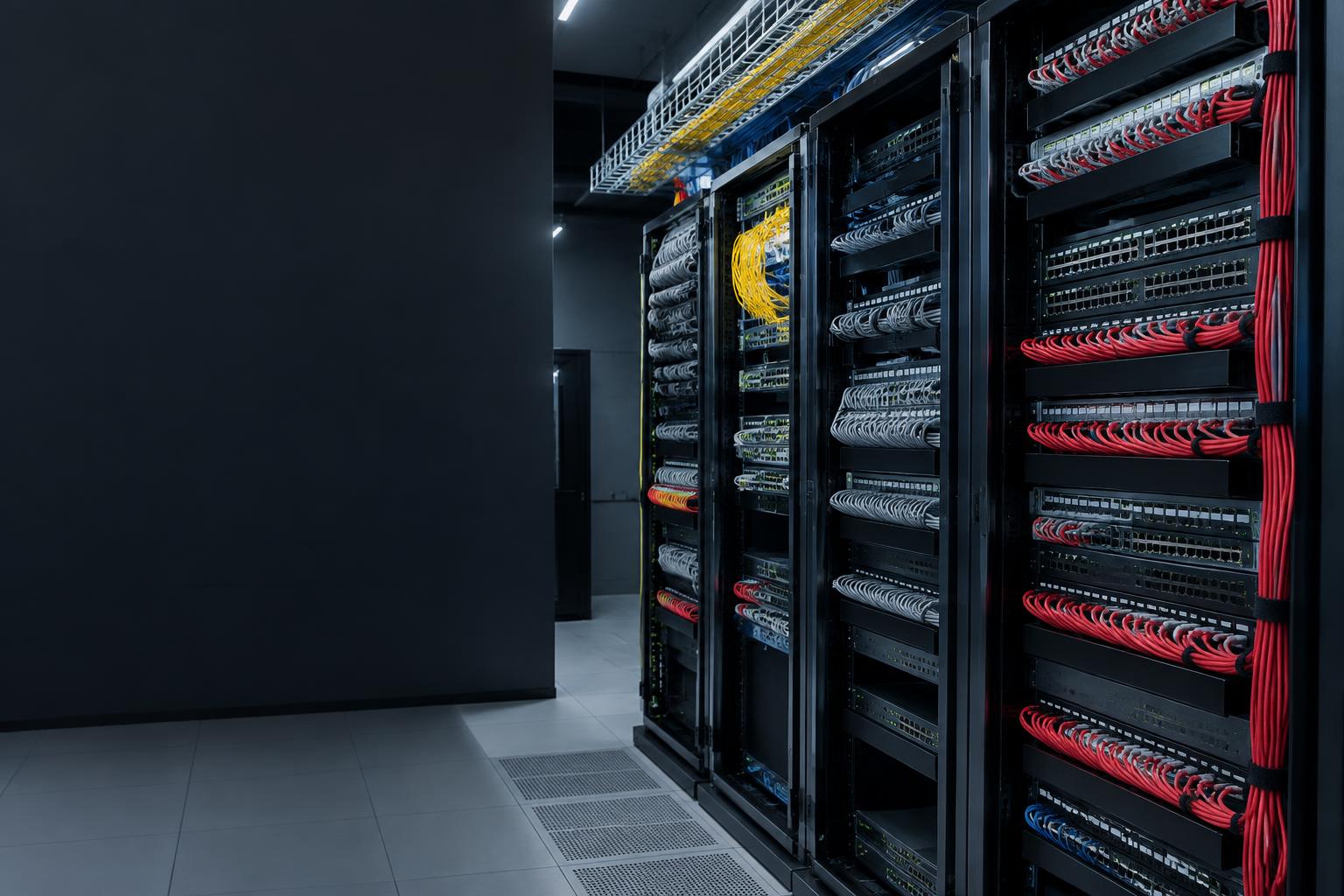
Copper · Fiber optics · Certification · Mexico
We design and install business network cabling with Cat 6, Cat 6A, Cat 7 and fiber optics. We certify every link, organize racks and document the infrastructure so it can grow without improvisation.
DIRECT ANSWER
Structured cabling is the standardized physical layer connecting users, equipment, voice, video, Wi-Fi and security systems. A business project includes engineering, copper or fiber, pathways, MDF and IDF, racks, patch panels, labeling, certification of every link and as-built documentation.
Cabling does not replace LAN design. A reliable physical layer comes first; switching, VLANs, Wi-Fi, security and network operations are configured on top of it.
Every component is selected for the building, applications, PoE power, distances and planned growth.
We select the category based on speed, distance, environment, interference and PoE demand. Specifications start with the application, not a category chosen out of habit.
We design multimode or single-mode fiber backbones to connect floors, buildings, industrial facilities, telecommunications rooms and data centers.
We test every installed link and deliver reports documenting its performance against the category and standard defined for the project.
We organize main and intermediate distribution frames, patch panels, cable managers, trays and racks so every port can be identified and maintained.
We account for bundling, wire gauge, temperature and power to supply access points, phones, cameras and connected devices without compromising the link.
We deliver consistent naming, as-built drawings, outlet inventories, cable routes and reports to reduce troubleshooting time and simplify future changes.
BUSINESS APPLICATIONS
There is no one-size-fits-all approach. Routes, media and protection vary with the building and its operational importance.
An organized physical foundation for connecting workstations, IP phones, displays, cameras and access points.
Documented backbone and distribution infrastructure for growth, redundancy and moves without losing traceability.
Routes and materials selected for interference, dust, temperature, humidity and operational needs.
Fiber optics connecting rooms and buildings with expansion capacity and clearly defined management points.
The project is complete when your business can identify, test and manage what has been installed.
We review drawings, outlet quantities and types, routes, distances, rooms, power, growth and site restrictions.
We define the physical topology, MDF and IDF, copper or fiber, pathways, racks, patch panels, labeling and testing criteria.
We install, terminate and organize cabling while respecting bend radii, electrical separation and manufacturer requirements.
We test links, address findings and deliver reports, as-built drawings, an inventory and project documentation.
The difference lies in engineering, documented performance and the ability to maintain the installation.
| Criteria | Basic installation | BITS structured cabling |
|---|---|---|
| Scope | Run cables and activate ports | Design a complete, maintainable physical layer |
| Testing | Basic continuity checks | Link certification based on category and project requirements |
| Identification | Partial or missing labels | Consistent naming across outlets, panels, racks and drawings |
| Handover | No centralized records | Reports, inventory, routes and as-built drawings |
| Growth | Reactive changes | Capacity and routes planned during engineering |
DELIVERABLES
Your IT team receives useful records to operate, audit and expand the infrastructure.
Cabling works best when coordinated with networking, Wi-Fi, power, monitoring and site growth.
It is the standardized physical infrastructure that carries data, voice, video and low-voltage power within a business. It includes horizontal cabling, backbone, fiber, MDF, IDF, racks, patch panels, connectors, pathways, labeling, testing and documentation.
It includes a site assessment, route engineering, copper and fiber selection, pathways, cable installation, termination, racks, organization, labeling, certification and as-built drawings. The final scope depends on the building, outlet count and applications the network will support.
Cat 6 can support common business applications when distances and conditions are suitable. Cat 6A is typically considered for 10 Gigabit Ethernet, higher-demand PoE links and projects needing more room for growth. Each case requires an individual assessment.
Yes, when the technical specification and component ecosystem justify it. Before recommending it, we review compatibility, connectors, grounding, interference and total cost; in many projects, Cat 6A or fiber is a better fit.
It is the main link connecting MDF, IDF, floors, buildings or campus areas. Fiber supports longer distances and high capacity while avoiding electromagnetic interference; it can be multimode or single-mode depending on the architecture.
Each link is tested with a calibrated certification tester for the appropriate category. The report records performance parameters and helps identify termination, length or interference issues before accepting the installation.
Yes. We first inventory ports, equipment and dependencies, then define maintenance windows and a phased sequence. The goal is to reduce risk, preserve traceability and leave labeling and documentation up to date.
Handover may include an outlet inventory, certification reports, as-built drawings, naming conventions, routes, completion photos and technical documentation. Documentation requirements are agreed in the proposal.
Schedule an assessment of outlets, routes, MDF, IDF, racks and growth. BITS will provide a technical proposal to install, certify and document your business's physical network.
Business support in Mexico · +52 614 399 2945