
Context-based permissions
Define access by person, zone, site, schedule, shift or expiration without distributing physical keys.
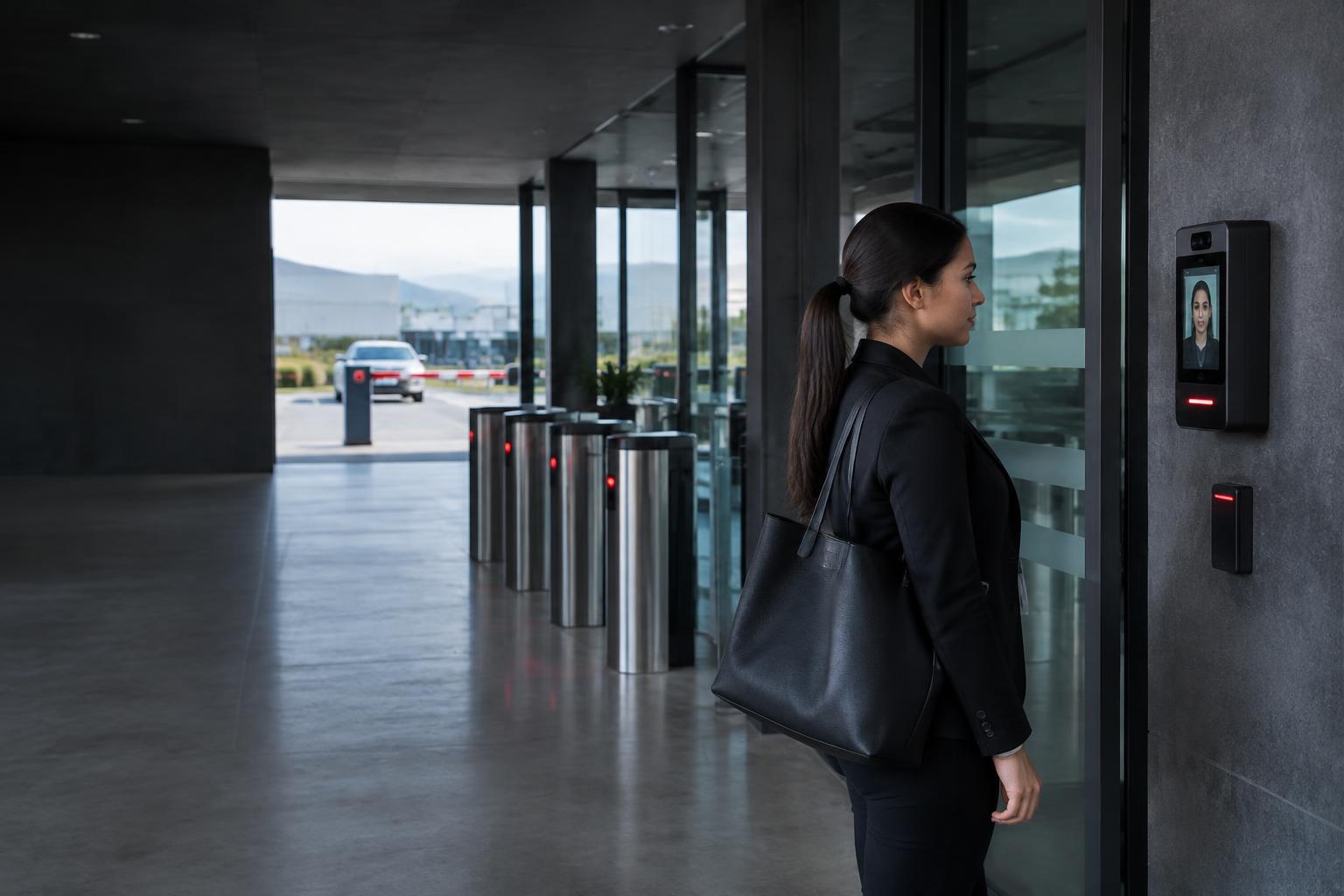
Access control · Biometrics · RFID · Mexico
Authorize the right person, at the right place and during the permitted schedule. BITS designs and integrates pedestrian and vehicle access for plants, offices, distribution centers and multi-site operations.
DIRECT ANSWER
It is a physical security solution that identifies people or vehicles, validates permissions and activates doors, turnstiles or barriers. It combines biometric readers, RFID or mobile credentials, access controllers and centralized software to log every event, manage visitors and revoke permissions in real time.
Access control decides who may enter; CCTV documents and verifies what happened. Time and attendance may use authorized events, but it serves HR processes and does not replace physical security.
A well-designed architecture reduces unauthorized entry while keeping employees, visitors, contractors and vehicles moving.
Define access by person, zone, site, schedule, shift or expiration without distributing physical keys.
Review entries, exits, rejected attempts and permission changes in one central event log.
Integrate directories or HR to withdraw access when employment or contract status changes.
Manage branches and plants from one platform with owners and policies for each location.
TECHNOLOGIES
We select each device according to risk, pedestrian flow, environment and continuity requirements.
Face, fingerprint or palm readers validate identity and reduce credential sharing.
Cards, tags, QR codes and mobile credentials with centralized issuance, expiration, replacement and revocation.
Pedestrian flow control for lobbies, corporate facilities and plants with unauthorized-passage detection.
Vehicle barriers, long-range readers and policies for employees, visitors, fleets and vendors.
Electromagnetic locks, sensors, buttons and controllers with local logic and fail-safe operation.
Rules prevent credential reuse and preserve consistent entry, exit and occupancy records by area.
Not every point needs the same validation. We design security and continuity levels around each operation.
Shifts, contractors, interlocks, critical zones and emergency-safe access.
Guard stations, drivers, vendors, vehicle barriers and entry/exit traceability.
Visitors, mobile credentials, elevators, parking and multi-site administration.
Schedule-based permissions, cash areas and centralized removal of access.
We integrate mechanics, power, network, identity and emergency protocols as one system.
We review doors, lanes, capacity, schedules, risks, evacuation routes and existing systems.
We define readers, controllers, locks, barriers, power, network and authorization levels.
We connect APIs with CCTV, directory or HR and configure profiles, zones and antipassback.
We validate passage, alerts, emergency release, continuity, logs and operator training.
Access control protects facilities and enforces permissions at doors, turnstiles or barriers. Time attendance records work schedules for employment processes. They may share identity and events through integration, but their rules and purposes should remain separate.
Yes. Through APIs or manufacturer events, a forced door, rejected access or after-hours opening can display the associated camera and retain evidence in the VMS.
Suitable controllers retain users, schedules and rules locally. The design can include UPS power, redundant communications and event storage for synchronization when connectivity returns.
Yes. A central platform can manage sites, owners, profiles and reports, while each location preserves local autonomy and does not depend entirely on the WAN connection.
It depends on risk, flow, privacy, environment and user experience. RFID speeds passage, biometrics binds identity to a person, and combined authentication increases control in critical areas.
It prevents a credential from recording two consecutive entries without a valid exit, or from being reused in another zone out of sequence. It requires defined entry and exit readers, exceptions and emergency procedures.
Schedule an assessment of doors, lanes, users and integrations. You will receive a technical recommendation aligned with your company's real risk and traffic flow.