
Energy under control
Schedule loads, identify after-hours consumption and compare performance by zone, equipment or site.
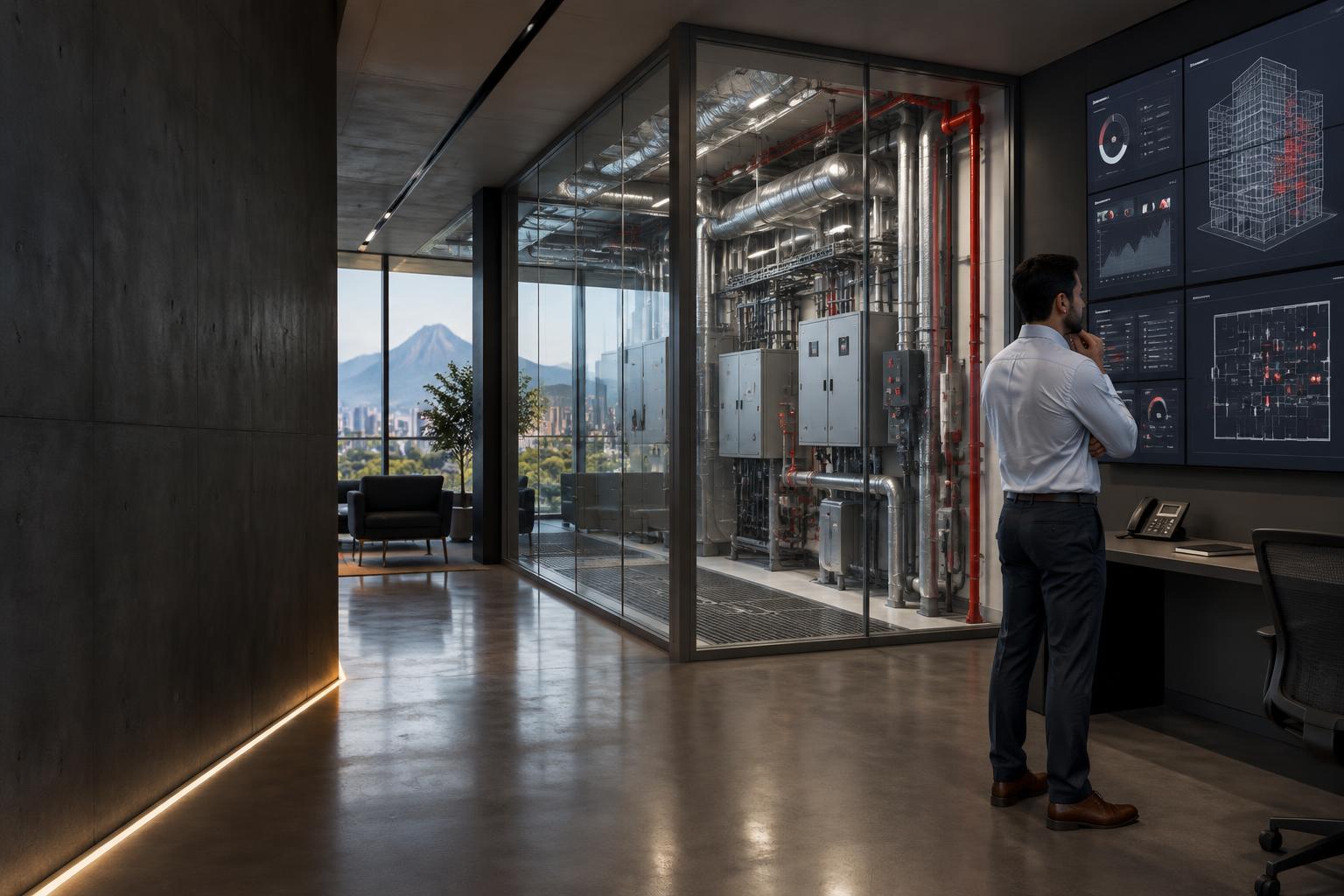
BMS · Smart buildings · IT/OT integration · Mexico
Centralize climate, lighting, energy and critical building systems to make data-driven decisions, reduce waste and anticipate failures across offices, plants, hotels and multi-site operations.
DIRECT ANSWER
A BMS (Building Management System) is the platform that monitors and controls HVAC, lighting, energy, pumping, alarms and occupancy from one interface. It receives data from sensors and controllers, applies operating rules and generates alerts to keep a building efficient, safe and available.
A BMS coordinates facility operations; it does not replace CCTV, access control or IT monitoring. It connects them through protocols and events so facilities, security and technology teams share one operational view.
Read the technical BMS definition in the BITS glossaryEffective automation turns isolated signals into actionable information for facilities, maintenance and management.
Schedule loads, identify after-hours consumption and compare performance by zone, equipment or site.
Receive temperature, pressure, current and status alarms so technical teams can prioritize action.
Adjust HVAC and lighting using schedules and occupancy sensors rather than manual walkthroughs.
Standardize dashboards, permissions, histories and rules to manage multiple buildings centrally.
BMS CAPABILITIES
We design an interoperable architecture around existing equipment, operational priorities and growth plans.
Monitor chillers, air handlers, VAVs, pumps, exhaust systems, temperature, humidity and pressure.
Use schedules, scenes, dimming and occupancy sensors to consume energy only where needed.
Track consumption, demand, power quality and comparisons that reveal deviations.
Integrate equipment and controllers through open protocols, gateways and normalized points.
Add environmental, leak, occupancy and condition telemetry without unnecessary replacement.
Apply segmentation, secure access, APIs, audit trails and links to monitoring and maintenance platforms.
Sequences, alarms and metrics vary by building use and by the operational impact of a failure.
Occupancy-based climate, zoned lighting, air quality and centralized common-area operation.
Monitor utilities, pressure, exhaust, power and process-support conditions.
Guest comfort, rooms, common areas and zone consumption with dynamic schedules.
Repeatable policies, remote alarms and energy control across distributed portfolios.
Commissioning covers point engineering, networks, sequences, alarms and acceptance criteria.
We inventory equipment, panels, signals, protocols, schedules, recurring failures and business goals.
We define controllers, sensors, topology, BACnet, Modbus or KNX integration and operating sequences.
We connect subsystems, normalize points and build clear dashboards for each user role.
We test alarms, trends, contingencies and performance, then document and train the responsible team.
No. It can be introduced in phases across existing facilities. We first assess equipment, controllers and protocols, then decide what to retain, connect through gateways or modernize.
A BMS manages enterprise facilities with continuity, permissions, histories and alarms. Home automation primarily serves residences. IoT adds sensors and connectivity, but still needs a platform and rules to become operational control.
Yes. The architecture can combine protocols through controllers and gateways. Point lists, versions, licenses and the available control level must be validated before implementation.
It measures actual behavior, identifies after-hours loads and automates HVAC and lighting according to demand and occupancy. Results depend on the baseline, existing sequences and identified opportunities.
We segment the OT network, restrict access, apply role-based credentials, use encrypted connections where supported and back up configurations. Remote integration is designed around security policies, not exposed ports.
Yes. We can centralize sites with dashboards, alarms, histories and building-specific permissions while preserving local control if external connectivity is lost.
Schedule an assessment of equipment, protocols, consumption and critical points. BITS will provide a phased automation roadmap aligned with your facilities' actual operations.